What is Hawaiian Food? A History of Hawaiʻi's Unique Cuisine
What is Hawaiian food?
That sounds like a simple question, but the answer is anything but simple.
Years ago, we conducted an informal poll asking people what foods came to mind when they heard the words “Hawaiian food.” Pineapple was the most common answer. Kabobs came in second.
I found that fascinating because neither is native to Hawaiʻi. Even the coconut, something almost inseparable from the popular image of tropical islands, was brought to Hawaiʻi by Polynesian voyagers.
Pineapple is native to South America and was introduced to Hawaiʻi after Western contact. Francisco de Paula Marín recorded growing pineapple in Hawaiʻi in 1813. And the famous “Hawaiian pizza” isn't Hawaiian at all. The ham-and-pineapple combination is generally credited to Greek-born restaurateur Sam Panopoulos in Ontario, Canada, in 1962.
So what exactly makes food Hawaiian?
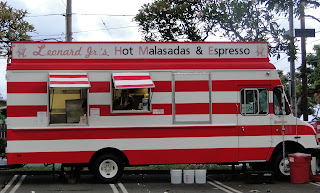
Part of the confusion comes from using “Hawaiian food” to describe several different things. Native Hawaiian cuisine, foods introduced after Western contact, Hawaiʻi's multicultural local food traditions, and the tourist world's idea of “Hawaiian” food have all become tangled together. There is even a debate between people born and raised in Hawai'i as to what constitutes Hawaiian food. Some would argue only foods of the original settlers qualifies. Dishes such as ferns, poi and poke. While others would include Musubi, saimin' and malasada type foods.
I like to explain that evolution in four broad chapters. These aren't official culinary classifications. They're simply a useful way of understanding how the food eaten in Hawaiʻi became what it is today.

Native Hawaiian Food Before Western Contact
Polynesian voyagers settled the Hawaiian Islands roughly 1,000 years ago, with current archaeological evidence generally placing settlement between 1000 and 1200 CE.
They were extraordinary navigators who crossed thousands of miles of open Pacific in double-hulled voyaging canoes. They didn't arrive empty-handed. They brought plants and animals necessary to establish life in their new home, including kalo (taro), ʻuala (sweet potato), niu (coconut), maiʻa (banana), kō (sugar cane), puaʻa (pig), moa (chicken) and ʻīlio (dog).
The ocean provided another pantry: fish, shellfish, ʻopihi and limu. Kalo became particularly important, with poi serving as a major staple. ʻUlu (breadfruit), sweet potato, bananas and seafood were also important parts of the diet.
Foods could be cooked in an imu, an underground oven using heated stones, as well as roasted, broiled, steamed or eaten raw depending on the food.
This is the foundation of traditional Native Hawaiian food.
It is important to distinguish this cuisine from the much broader collection of foods that people today may call “Hawaiian food.”

Western Contact Changes the Hawaiian Table
Captain James Cook's arrival in 1778 marked the beginning of sustained Western contact, bringing enormous changes to Hawaiian society, including changes in agriculture and food.
One particularly interesting chapter began with cattle.
Captain George Vancouver presented cattle to Kamehameha I in 1793. Kamehameha placed a kapu on killing them so the herd could grow. It worked perhaps a little too well. The cattle multiplied and eventually became destructive and dangerous.
Under Kamehameha III, Mexican vaqueros were brought to Hawaiʻi in the 1830s to teach Hawaiians how to manage cattle. Hawaiians became accomplished horsemen and developed their own distinctive cowboy culture. These cowboys became known as paniolo.
This period brought new ingredients, livestock and cooking traditions into Hawaiʻi. The Hawaiian table was beginning another transformation. During this time period other dishes such as Roasted Chicken, Lomi Salmon (shown left), Beef Stew, Chili, and Macaroni Salad became popular in Hawai'i.
Plantation Immigration and the Birth of Local Food
The next great transformation came with Hawaiʻi's plantation economy.
Beginning in the mid-1800s, plantation owners recruited workers from around the world. Chinese contract laborers arrived beginning in 1852. They were followed over the decades by large numbers of Japanese, Portuguese, Puerto Rican, Korean, Okinawan and Filipino workers, among others.
These communities brought their own food traditions to Hawaiʻi.

The islands lacked the spices from these foreign lands leaving these immigrants to improvise with ingredients available to them. Many dishes in Hawaii morphed into a variation of the original dish from their homeland. Generations grew up alongside people from other cultures. Foods, techniques and flavors crossed cultural lines.
One of my favorite examples is saimin.
Saimin is a noodle soup unique to Hawaiʻi whose history reflects the islands' multicultural plantation era. Its name has Cantonese roots, while versions of the dish incorporate influences associated with several of Hawaiʻi's immigrant communities. Rather than belonging neatly to China or Japan, saimin became distinctly local to Hawaiʻi. Saimin, is so popular in Hawaii it can be purchased at McDonald's.
Perhaps nothing represents this cultural mixing better than the plate lunch.
Plantation workers from different backgrounds brought their lunches into the fields. Over time, foods and eating traditions crossed cultural boundaries. University of Hawaiʻi culinary historians connect those immigrant field lunches with the development of today's plate lunches, bentos and lunch wagons.
Eventually the familiar plate lunch emerged: rice, macaroni salad and an entrée, or several entrées, reflecting Hawaiʻi's multicultural food traditions.
Teriyaki chicken might sit beside kalua pig. Chicken katsu might share a plate with Korean-style kalbi ribs. Add rice and mac salad and somehow all those different culinary histories belong together.
That's Hawaiʻi local food in one takeout container.
Tourism Creates Another Kind of “Hawaiian Food”
Then there's another layer: what the rest of the world imagines Hawaiian food to be.
As tourism expanded, especially during the 20th century, Hawaiʻi became associated with tropical escapism: pineapples, coconuts, colorful drinks, beaches, leis and eventually America's broader tiki culture. It wasn't until 1959 when the islands of Hawaii became the 50th state to join the United States of America. This along with air travel opened the doors for American tourists and the creation of the booming tourism industry in Hawaii.
Pineapple became especially powerful shorthand for “Hawaiian.” Put pineapple on something and suddenly somebody wants to call it Hawaiian.
That helps explain why someone on the mainland might picture pineapple kabobs when asked about Hawaiian food even though neither represents traditional Native Hawaiian cuisine.
Hawaiian pizza may be the ultimate example. Despite its name, the famous ham-and-pineapple pizza originated in Ontario, Canada, in 1962.
  The tourist image of Hawaiian food became its own thing, sometimes connected to the foods actually eaten in Hawaiʻi and sometimes barely connected at all.
 The tourist image of Hawaiian food became its own thing, sometimes connected to the foods actually eaten in Hawaiʻi and sometimes barely connected at all.
The tourism boom brought about movies such as the 1961 Blue Hawaii by Elvis, popular mixed drinks served in hollowed out coconuts or pineapples. These practices fed the notion if you want to make something Hawaiian add pineapple to it.
In Hawaiʻi, the distinction between “Hawaiian” and “local” matters.
Hawaiian, particularly when referring to people and culture, is associated with the Indigenous Polynesian people of the Hawaiian Islands and their descendants. Someone can be born and raised in Hawaiʻi and be local without being Native Hawaiian.
Food has developed along a similar path. Native Hawaiian food comes from the food traditions of the Indigenous Hawaiian people. Foods such as poi and preparations involving kalo, ʻuala, ʻulu, limu and traditional imu cooking belong to that story.
Local Hawaiʻi food, on the other hand, grew from the many cultures that eventually made Hawaiʻi home. Chinese, Japanese, Portuguese, Filipino, Korean, Okinawan, Puerto Rican and other immigrants brought their own foods and cooking traditions. Over generations, those traditions mixed with one another and with the foods already present in Hawaiʻi.
That's how Hawaiʻi developed a local cuisine all its own.
So What Is Hawaiian Food Today?
All of this is why I don't think Hawaiian food can be explained by pointing to a single dish.
There is traditional Native Hawaiian food, rooted in the foodways developed by Native Hawaiians before and after Western contact.
And there is the broader local food of Hawaiʻi, shaped by generations of Native Hawaiian, Chinese, Japanese, Portuguese, Filipino, Korean, Okinawan, Puerto Rican and other communities.
Even the University of Hawaiʻi describes foods eaten in Hawaiʻi as reflecting the broad cultural range of the people who call the islands home.
At Buzz's Hawaiian Grill in St. Louis, much of what we serve comes from this broader local-food tradition: plate lunches, poke, musubi, saimin, teriyaki chicken, kalua pig, Huli Huli chicken and other foods familiar to people who have lived in or spent time in Hawaiʻi.
Depending on a person's heritage, and exposure, certainly plays a role in what they may see as Hawaiian. I've sometimes described Hawaiʻi's local cuisine as fusion food before “fusion” became a restaurant buzzword.
Cultures met. Recipes traveled. Ingredients changed. Neighbors shared ideas. New generations made those foods their own.
The result is a cuisine that tells the history of Hawaiʻi one plate at a time.
Any way you slice it, Hawaiian food is a compilation of world wide cultural blending of dishes described in Hawai'i as being Ono!

Comments
Post a Comment